


Florida’s Division of Workers’ Compensation reviewed 6,256 claim files in fiscal year 2024 to 2025 and found 840 in which injured workers had been underpaid, about 1 in every 7. State audits recovered $766,027 in unpaid benefits for injured workers that year, more than double the amount recovered four years earlier. Retail, construction, and health care produced the most lost-time injury claims in 2024.
Reviewed by Scott J. Sternberg, a Florida lawyer since 1998 and founder of Sternberg | Forsythe, a firm that has handled more than 60,000 workers’ compensation claims. Last reviewed November 2026.
Most injured workers in Florida never see the numbers behind the workers’ compensation system. The Division of Workers’ Compensation publishes them every year in its Annual Results and Accomplishments Report. We analyzed the 2025 report, covering fiscal year 2024 to 2025 and calendar year 2024, to show where Florida workers are getting hurt, how often insurers underpay or pay late, and where disputes are growing.
Key Findings
- 1 in 7 audited claim files showed underpayments. The Division examined 6,256 claim files in fiscal year 2024 to 2025 and found 840 underpaid files, or 13.4%.
- Recovered benefits more than doubled. State audits recovered $766,027 for injured workers in fiscal year 2024 to 2025, up 134% from $326,901 in fiscal year 2020 to 2021. Over five years, audits recovered more than $2.6 million.
- Late payment penalties more than doubled. Penalties assessed for untimely indemnity (wage replacement) payments rose from $89,250 to $200,950 over the same period.
- Permanently disabled workers were shorted too. Reviews of permanent total disability claims recovered $1,037,304 in underpayments for 216 claimants.
- Retail leads in lost-time injuries. Retail trade recorded 7,016 lost-time claims in 2024, followed by construction (5,581), health care and social assistance (5,565), and transportation and warehousing (5,435).
- Strains and falls cause most injuries. Strains and sprains (30%) and falls or slips (29%) accounted for 59% of lost-time claims in 2024.
- Medical billing disputes are up 48%. Petitions to resolve medical bill reimbursement disputes rose from 6,511 in fiscal year 2020 to 2021 to 9,625 in fiscal year 2024 to 2025.
Finding 1: Underpayments Are Common, and Recoveries Are Growing
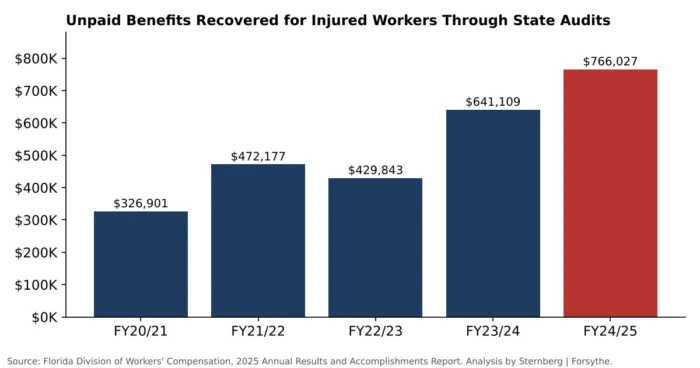
Figure 1. Benefits recovered for injured workers through Division of Workers’ Compensation claim audits, by state fiscal year (July 1 through June 30).
The Division’s Audit Section reviews insurer claim files to check whether injured workers were paid the correct amount on time. In fiscal year 2024 to 2025, auditors examined 6,256 claim files and identified 840 in which the worker was underpaid. The audits recovered $766,027 in benefits for injured workers, the highest amount in the five years reported, and assessed $200,950 in penalties for late indemnity payments and $99,800 in penalties for late first reports of injury.
The trend is moving in the wrong direction for workers. Recovered benefits rose every year except one, from $326,901 in fiscal year 2020 to 2021 to $766,027 in fiscal year 2024 to 2025. Penalties for late wage replacement payments more than doubled over the same period.
| Fiscal year | Audits | Late indemnity penalties | Late first report penalties | Benefits recovered for workers |
| 2020 to 2021 | 33 | $89,250 | $39,100 | $326,901 |
| 2021 to 2022 | 41 | $69,600 | $54,500 | $472,177 |
| 2022 to 2023 | 44 | $104,500 | $73,000 | $429,843 |
| 2023 to 2024 | 45 | $171,450 | $100,900 | $641,109 |
| 2024 to 2025 | 48 | $200,950 | $99,800 | $766,027 |
Workers receiving permanent total disability benefits were also affected. The Division reviewed 33,748 permanent total claim transactions and recovered $1,037,304 in underpayments for 216 claimants, averaging about $4,800 each. Underpayments often come from an incorrect average weekly wage or compensation rate, so it is worth checking how your benefits were calculated. Our guide explains how Florida workers’ comp is calculated.
Finding 2: Where Florida Workers Are Getting Hurt
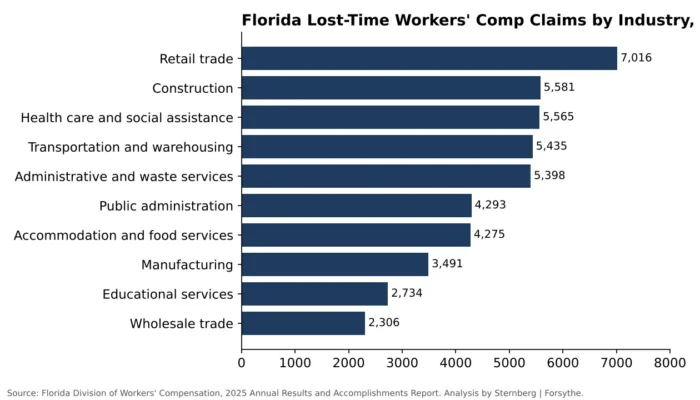
Figure 2. Florida lost-time workers’ compensation claims by industry, calendar year 2024, for the ten industries with the most claims.
Retail trade produced more lost-time claims than any other industry in 2024, with 7,016. Construction (5,581), health care and social assistance (5,565), transportation and warehousing (5,435), and administrative and waste services (5,398) followed closely. Together, the top ten industries accounted for 46,094 lost-time claims. A lost-time claim is one in which the injury kept the worker off the job long enough to qualify for wage replacement benefits.
Each of these industries has its own risks. Retail and warehouse workers face lifting and fall injuries, construction workers face falls from heights and struck-by injuries, and health care workers face patient-handling injuries. Learn more about workers’ comp for retail workers, health care workers, warehouse workers, and construction workers.
Finding 3: Strains and Falls Cause Most Lost-Time Injuries
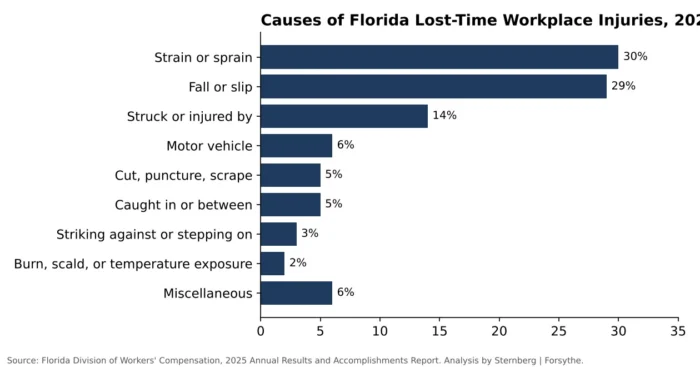
Figure 3. Share of Florida lost-time workers’ compensation claims by cause of injury, calendar year 2024.
Strains and sprains caused 30% of lost-time injuries in 2024, and falls and slips caused another 29%. Being struck by an object (14%) and motor vehicle crashes (6%) were the next most common causes. Many of these injuries, especially back injuries, lifting injuries, and falls from heights, lead to long recoveries, permanent restrictions, and disputes over whether the worker can return to the same job.
Finding 4: Medical Billing Disputes Have Grown 48%
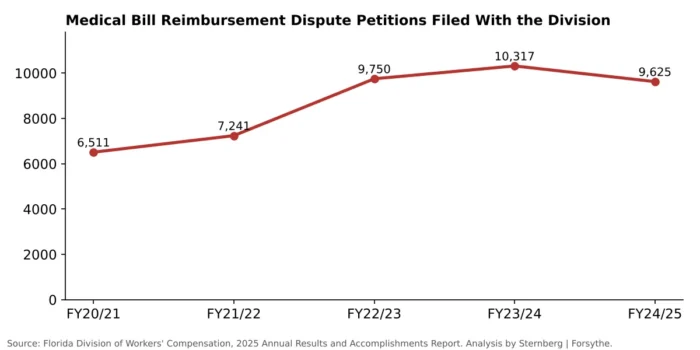
Figure 4. Petitions for resolution of medical reimbursement disputes received by the Division’s Medical Services Section, by fiscal year.
When a doctor, hospital, or surgery center disagrees with an insurer about payment for treating an injured worker, the provider can file a petition with the Division. Those petitions rose from 6,511 in fiscal year 2020 to 2021 to a high of 10,317 in fiscal year 2023 to 2024, before easing to 9,625 in fiscal year 2024 to 2025. Petitions from individual practitioners alone rose from 4,412 to 6,459.
Billing disputes are between providers and insurers, but they can still affect injured workers. Providers who are not paid promptly may delay treatment, decline to schedule follow-up care, or stop accepting workers’ comp patients. Learn more about Florida workers’ comp medical benefits and your right to authorized treatment.
Finding 5: Where the Medical Money Goes
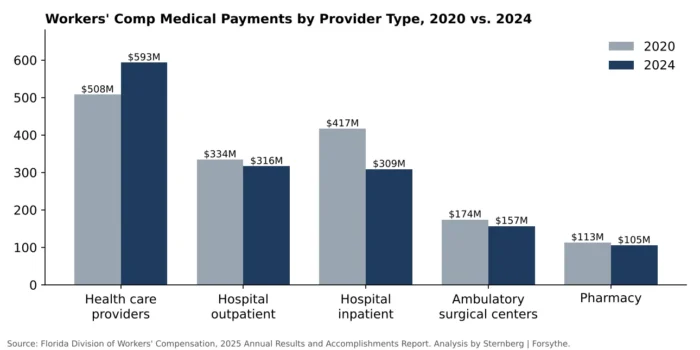
Figure 5. Workers’ compensation medical payments in Florida by provider type, calendar years 2020 and 2024.
Insurers paid $1.59 billion in workers’ compensation medical benefits for calendar year 2024. Payments to physicians and other health care providers grew 17%, from $507.6 million in 2020 to $593.2 million in 2024, while hospital inpatient payments fell 26%, from $416.9 million to $308.7 million. Payments for drugs dispensed and repackaged by physicians rose 79%, from $43.2 million to $77.4 million.
Finding 6: Employers Without Coverage
The Division’s Bureau of Compliance conducted 24,861 investigations in fiscal year 2024 to 2025 and issued 1,806 stop-work orders to employers that failed to carry required workers’ compensation coverage. The number of active exemptions, which allow certain business owners and officers to opt out of coverage, reached 1,070,669. Exemption applications rose 18% over five years, from 164,748 to 194,602, with the largest growth outside the construction industry.
If you were hurt working for an employer that should have had coverage but did not, you may still have options. Our guide explains what to do if your employer does not have workers’ comp.
“Insurance companies make mistakes, and the mistakes almost never favor the injured worker. A wage that was calculated wrong or a check that arrives weeks late can cost a family thousands of dollars before anyone notices. The state’s own audits show how often it happens, and those audits only reach a small fraction of claims. We review every client’s benefits line by line for exactly that reason.” Scott J. Sternberg, Attorney
How to Protect Your Workers’ Comp Benefits in Florida
- Report your injury to your employer in writing as soon as possible. Florida law sets strict notice and filing deadlines.
- Keep copies of every pay stub from the 13 weeks before your injury, since they determine your average weekly wage.
- Compare each benefit check to your expected compensation rate and keep a record of payment dates.
- Follow your authorized doctor’s restrictions and keep every medical record and work status note.
- If your claim is denied, delayed, or underpaid, talk to a lawyer about filing a petition for benefits. Learn what to do when a Florida workers’ comp claim is denied.
Limitations of This Data
- Audit results reflect only the claim files the Division chose to examine, not every claim in Florida.
- Lost-time claims by industry are reported for the ten industries with the most claims in calendar year 2024. The report does not include a statewide total of all lost-time claims or county-level data.
- Medical payment data for 2022 through 2024 is preliminary and may change as claims mature.
- Health care providers file medical reimbursement petitions, not injured workers.
Methodology
We reviewed the Florida Division of Workers’ Compensation’s 2025 Annual Results and Accomplishments Report, which reports data for state fiscal years 2020 to 2021 through 2024 to 2025 and calendar years 2020 through 2024. Figures were taken directly from the report’s tables and charts. Percentage changes and averages were calculated from those figures. The underpayment rate divides the 840 underpaid files identified by the 6,256 claim files examined in fiscal year 2024 to 2025.
Frequently Asked Questions
How common are workers’ comp underpayments in Florida?
In fiscal year 2024 to 2025, the Florida Division of Workers’ Compensation examined 6,256 claim files and found underpayments in 840 of them, about 13% or 1 in every 7 files reviewed.
Which industry has the most workers’ comp claims in Florida?
Retail trade had the most lost-time workers’ compensation claims in Florida in 2024, with 7,016, followed by construction with 5,581 and health care and social assistance with 5,565.
What is the most common workplace injury in Florida?
Strains and sprains caused 30% of lost-time workers’ compensation claims in Florida in 2024. Falls and slips caused another 29%.
What should I do if I think my workers’ comp benefits are wrong?
Check how your average weekly wage and compensation rate were calculated, keep records of every payment, and speak with a workers’ compensation attorney. You can file a petition for benefits if the insurer does not correct the problem.
Can an insurer be penalized for paying workers’ comp late in Florida?
Yes. The Division assesses penalties against insurers for late indemnity payments and late first reports of injury. In fiscal year 2024 to 2025, those penalties totaled more than $300,000.
How much does a Florida workers’ comp lawyer cost?
Sternberg | Forsythe charges no fee unless we recover money for you. Attorney fees in Florida workers’ compensation cases are regulated by statute and require approval.
Talk to a Florida Workers’ Compensation Lawyer
If your workers’ comp benefits have been denied, delayed, or underpaid, Sternberg | Forsythe can review your claim. The firm has recovered more than $100 million for Florida workers, and there is no fee unless we get money for you. Contact us or call (561) 687-5660 in West Palm Beach or (407) 481-9311 in Orlando.
